

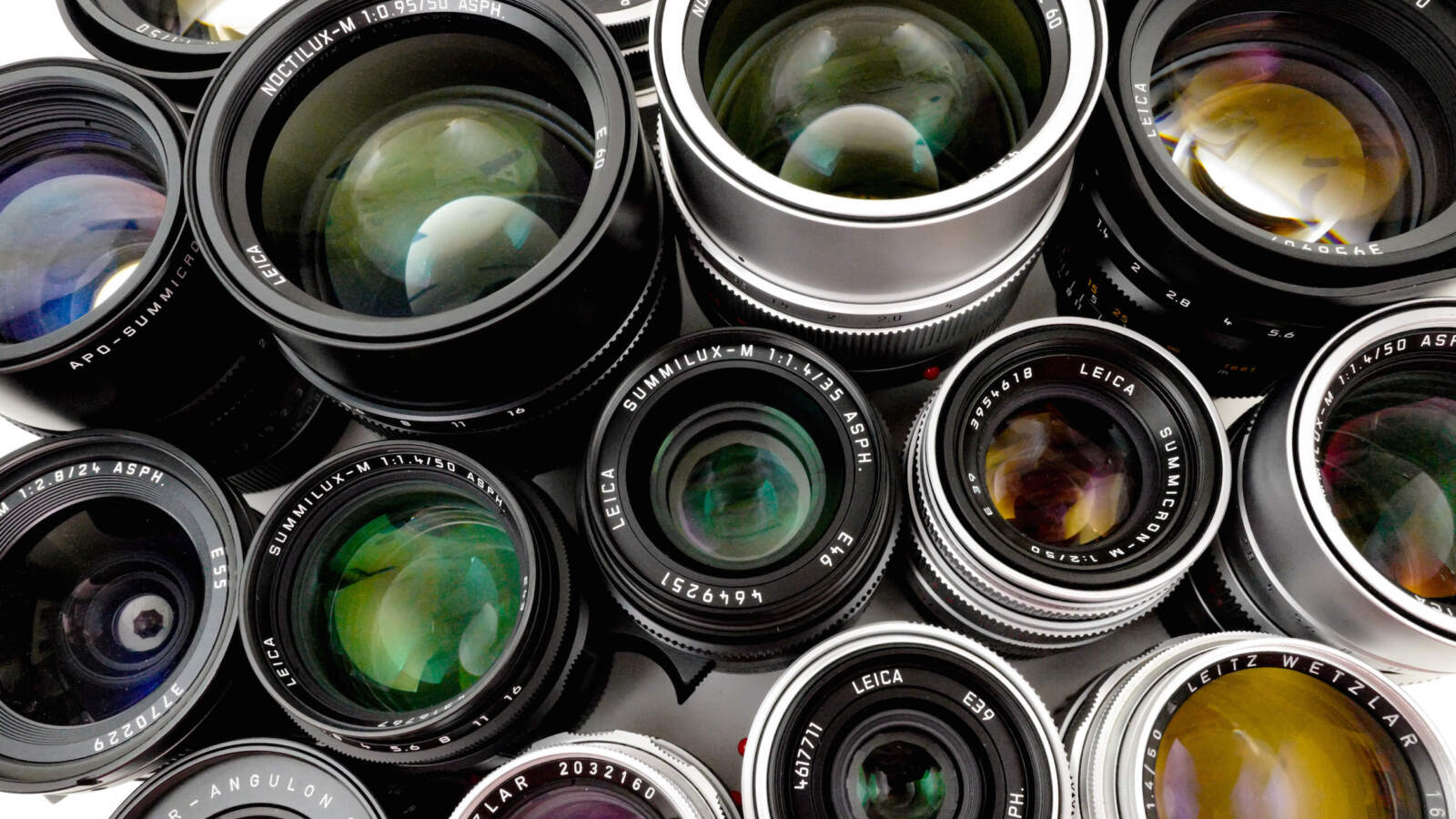
Leica Camera lenses are the finest optics on earth, and Leica Camera strives to create the best and innovate in the field of photography. Leica M lenses are compact, light and fast. That’s what makes them costly. But they’re made to last a lifetime – or longer. So, let’s pick the right one:
The Leica M Camera Rangefinder Principle
Because the Leica M camera does not show the photographer precisely what the lens "sees", the choice of focal length (the angle of view* of the lens) is paramount.
* For the purposes of this article, the terms "angle of view" and “focal length” are synonymous.

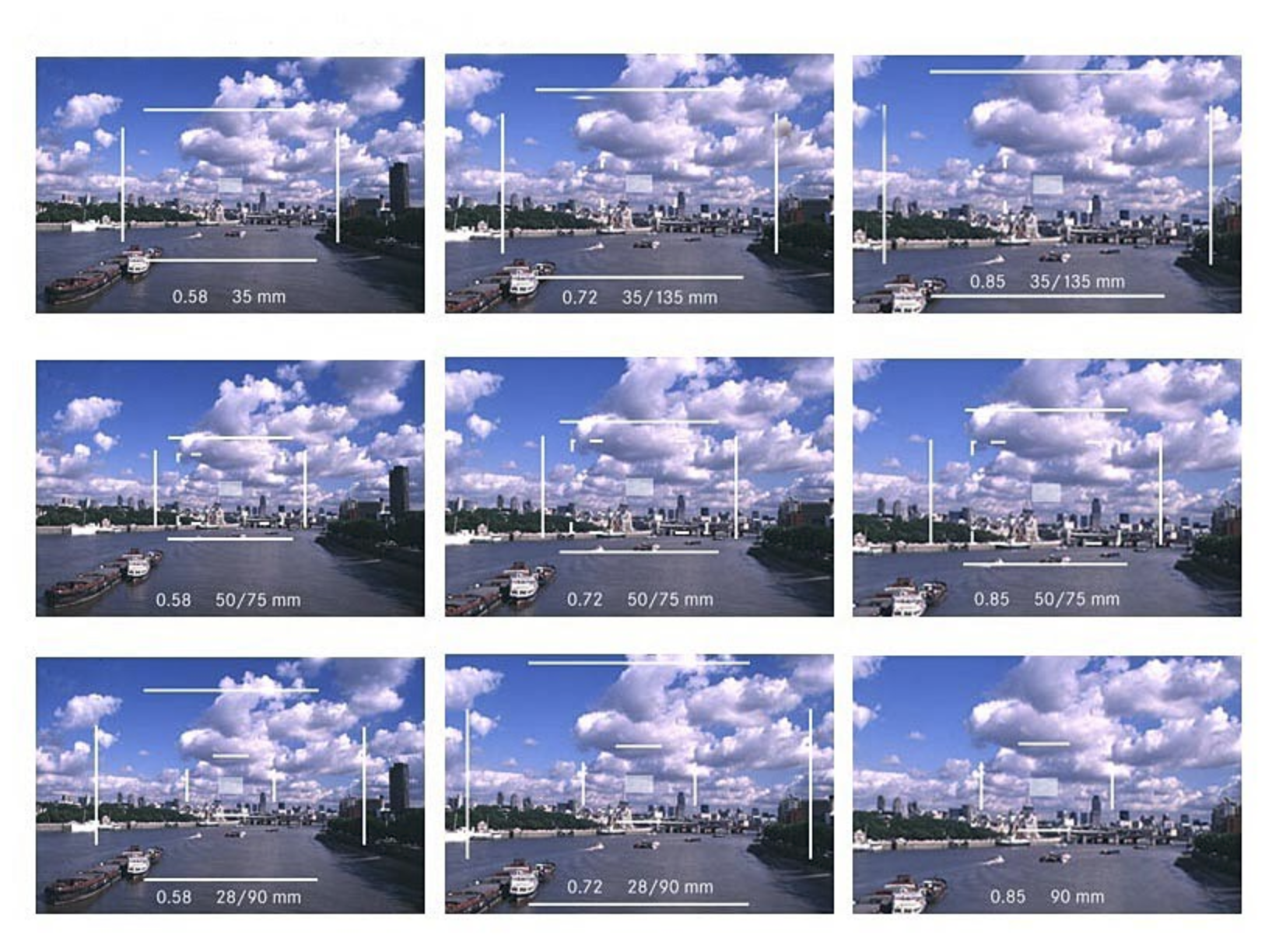
The Leica M camera viewfinder is simply a window that the photographer must use to compose the image.* Since the viewfinder is only a simple window, the Leica M camera superimposes frame-lines of various focal lengths into that window. The photographer frames his or her image using these frame-lines, which give an approximation of what the lens will capture. Just look at the front of a Leica M camera and you can plainly see that the large viewfinder window at top left is not in line at all with the actual lens – where the photo is made. This can be vexing for some photographers, but you get used to it. (More on this in our upcoming article on The Leica Rangefinder.) So, when looking through the viewfinder/rangefinder of the Leica M camera – and considering the frame-lines there – what you will get when you make the photograph is actually going to be lower and to the right of the frame-lines you see in the viewfinder. You get used to it, and the viewfinder/rangefinder of the Leica M camera is stunningly accurate. But this article is about lenses.
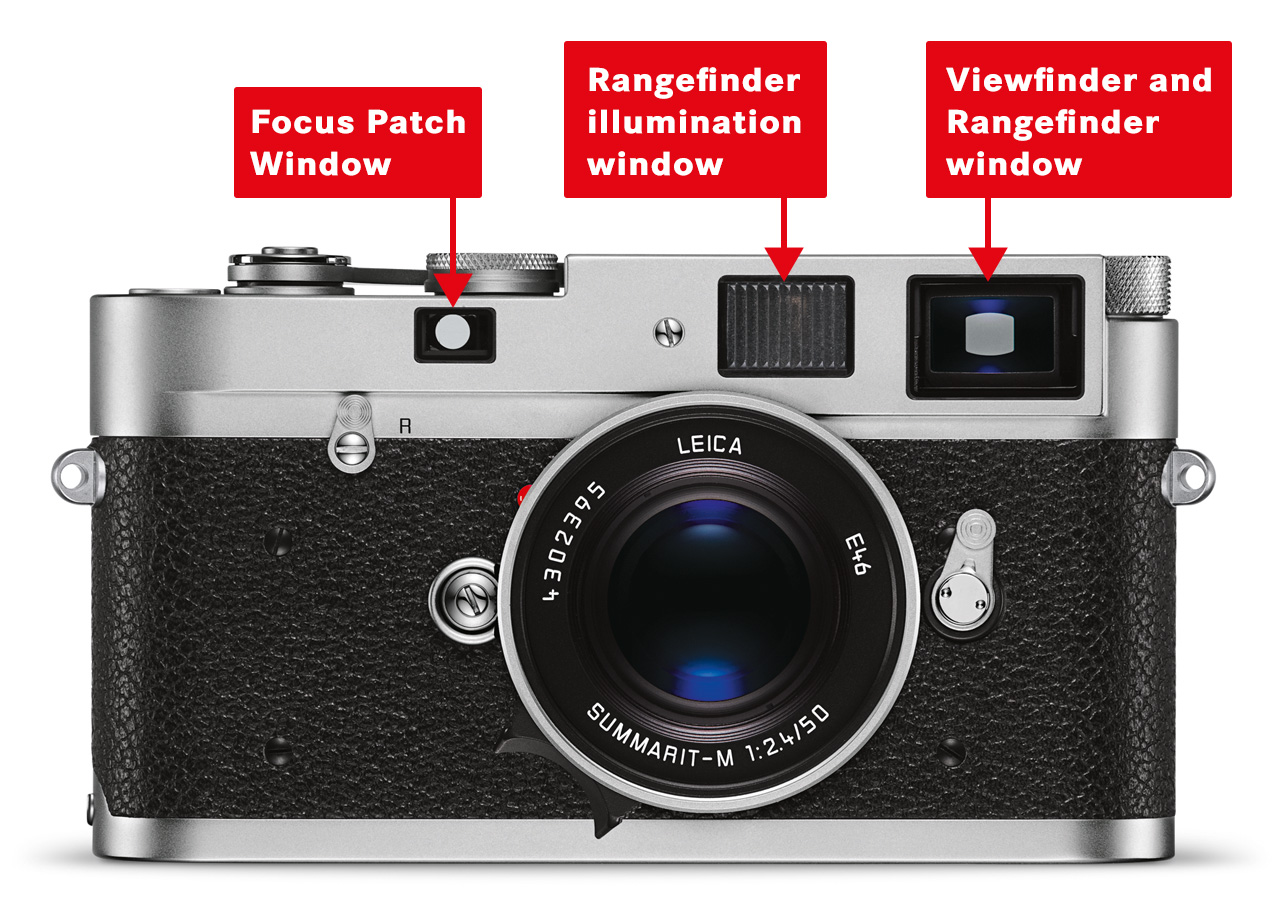
* Leica M digital camera viewfinders are 68% of actual size. Most film M cameras 72% of actual size. The Leica M3 remains extremely popular due to its 93% of life-size viewfinder magnification. With the M6 model, Leica began to manufacture viewfinder with 58% and 85% of life-size viewfinder magnification, which each have their own practical applications.
Framelines in the Leica M camera
Why Leica M Lenses*
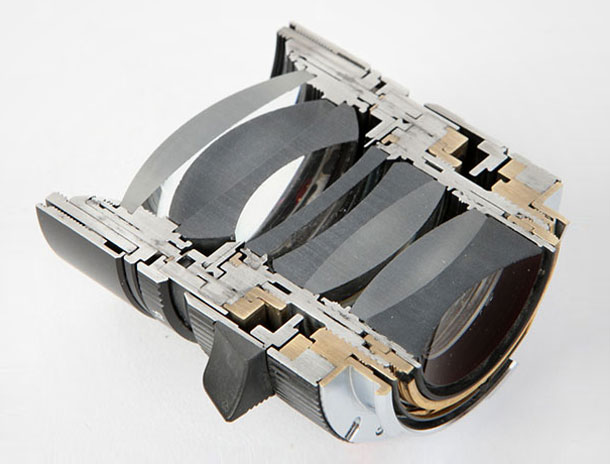
"Do you want the job done cheap, fast or good?" a friend is fond of asking his clientele. This maxim holds true for much in life, I think. Leica M lenses are the smallest, fastest and finest photographic lenses in the world. Each Leica lens is a little jewel in and of itself. They stand the test of time – visit your Leica dealer and see how well a properly maintained vintage Leica M lens performs. New Leica lenses do not come cheap. And, as it happens, they are not made particularly quickly, either. Leica takes their time manufacturing lenses, which is precisely how they make the very best. And they are not just good, but fantastic. Ever heard anyone say they don’t like their new Leica M lens?
* For the purpose of this article and simplicity’s sake, we are treating only Leica M lenses – not screw-mount or Visoflex or other-manufacturers’ screw-mount or M-bayonet-mount lenses. Many screw-mount lenses of all sorts work wonderfully on Leica M cameras – both analogue and digital M cameras. Contact us to learn more.
What Does It All Mean (or, Why do Leica people use all these strange words) ?!
A little background: photographic lenses are described in both number of focal length millimeters (“mm”), and in their “f-number,” or “f-stop.” The term “f-stop” and “aperture” are synonymous.
The idea of the f-stop was first described for photography in 1867 and has become a worldwide standard; it is the ratio of the focal length of the lens to the diameter of the entrance optics (front lens element or assembly). But what’s really important to understand is that the lower the f-stop – or aperture – number (f2,8 versus f4, for example), the more light the lens can capture, all else being equal. This is usually described as how “fast” a lens is, relative to other lenses.
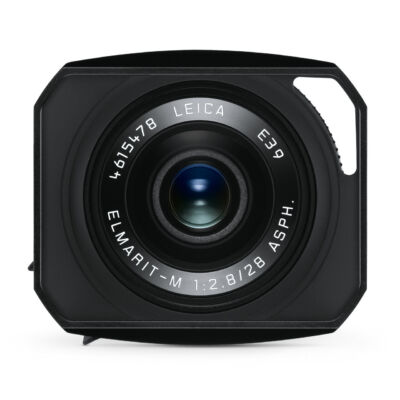
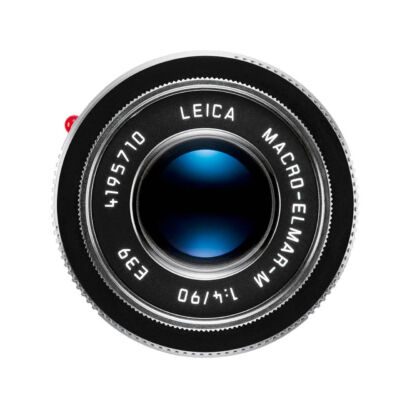
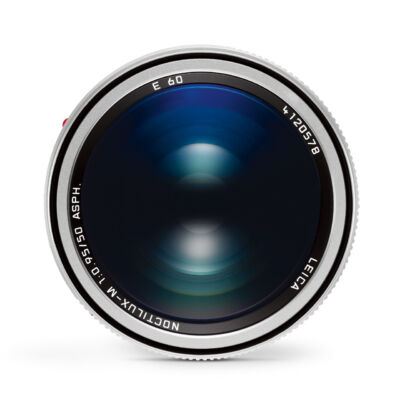
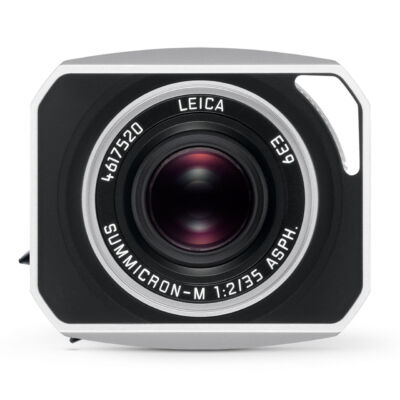
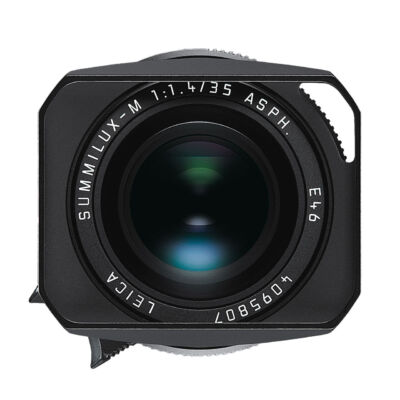
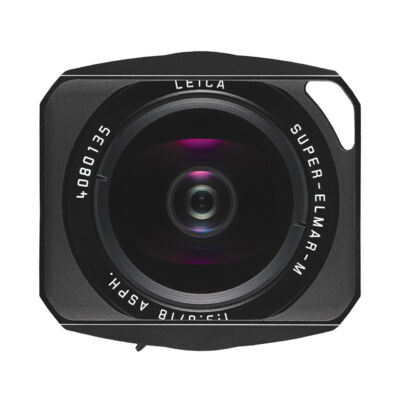
Here are the most commonly found f-stops found on modern Leica lenses:
f‑stops
f/1,4
f/2
f2,8
f4
f5,6
f8
f11
f16
f22
These designations – say from f2,8 to f4 – are known as “full stops.” Intermediary values may be possible to calculate and use; they are simply not listed on the aperture ring of the lens. For Leica lenses, these widest aperture values are part of the actual name of the lens, such as “Summicron” or “Elmarit”. These are Leica-trademarked names and are fairly simple to understand:
- All “Summicron” (soó-mèh-cron) Leica M lenses are f2
- All “Summilux” (soó-mèh-luks) Leica M lenses are f1,4
- All “Elmarit” (él-màhr-et) Leica M lenses are f2,8
- All “Elmar” (él-màhr) Leica M lenses are f4
However, there are some historical and currently manufactured lens models that partly break the “Elmar” convention, for example:
- 16-18-21 Tri-Elmar-M f4 ASPH*
- 18 Super-Elmar-M f3,8 ASPH
- 21 Super-Elmar-M f3,4 ASPH
- 24 Elmar-M f3,8 ASPH
- 90 Macro-Elmar-M f4
- 135 APO-Telyt-M f3,4
* The “-M” designation of these lenses means nothing for the purposes of this article. It is simply a newer Leica terminology, which began around 1979.
Then, there are “Summarit” (historically f1,5; now f2,4 or f2,5), and the extremely high-speed “Noctilux” (historically f1,2 and f1; now f0,95 !). It can be confusing. Again, the important part to understand is that is that the lower the f-stop – or aperture – number (f1,4 versus f2, for example), the more light the lens can capture, all else being equal.
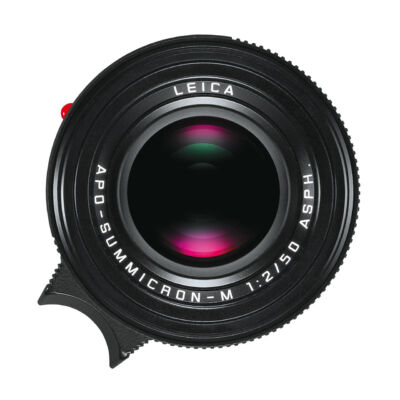
Now, Leica has a couple of other designations that are helpful to understand: “APO” and “ASPH.” In photography, lenses exhibit two types of anomalies: chromatic aberrations and spherical aberrations.
Chromatic aberration is an optical effect that occurs when the rays of light – and the colors transmitted there – are improperly dispersed within the optics of the lens. The result is wonky or inaccurate colors, or “color-fringing,” for example.
The Leica designation “APO” stands for “apochromatic correction” which – generally speaking – means that the rays of light are channeled through the lens to land precisely on the film plane (or sensor). An APO Leica lens has been calibrated to produce more vibrant and accurate color images –simple as that – it is corrected for chromatic aberration. Now, this does not mean that a non-APO lens is no good at color photography; it merely signals that the APO lens is a superior tool for color photography.
Spherical aberration is an optical effect that occurs when the light rays are refracted away from the center of the image or otherwise misdirected inside the optics of the lens; the rays do not meet at a focal point after entering the lens. It appears as defocus, curvature in the field, and a number of other undesirable anomalies. This is related to the “circles of confusion” which define the “bokeh” of a lens – the way a lens renders the out-of-focus areas. But don’t get caught up in that! All Leica lenses have beautiful, beautiful bokeh. They’re designed that way. More on that in a different post…
In Leicaland, “ASPH” means “aspherical.”A lens with an aspherical element or elements – generally speaking – means that one or more of the optic elements are asymmetrically ground (shaped), and this is helpful in creating a flatter field, better color, contrast and sharpness out to the image edges (where wide-angle lenses usually falter). A Leica “ASPH” lens corrects for spherical aberration.
I was an English major in college, so this is about as far as I can take these explanations without turning to a more technically-minded person with better science education that I retained from my schooling.*
* I failed physics all seven years of high school. Had I known how interested I would become in optics later in life, I would have concentrated more on math and science!
Canadian-made versus German-made
Here’s a quick Yes-or-No Q-&-A to figure it all out, once and for all:
Question #1: Are you a collector who wants one or the other specifically?
A: No? Skip to Question 2.
A: Yes? Call us – we’ll get you the lens you want
Question #2: Are you going to shoot it?
A: Yes? Then forget all about Canadian-made versus German-made. Forget anyone ever brought it up.
A: No? Call us – we’ll get you the lens you want. 1 – 800-BUY-LEICA
Focal Length (Angle of View) and You
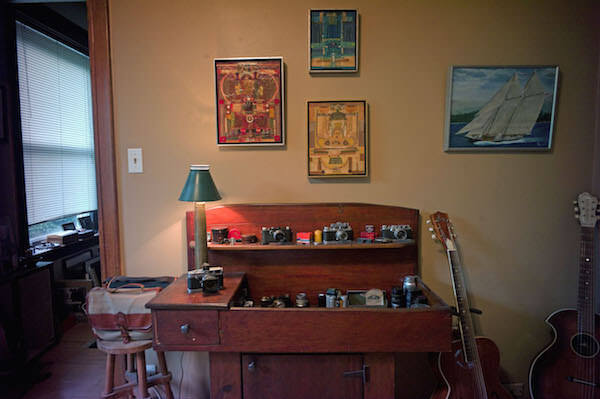
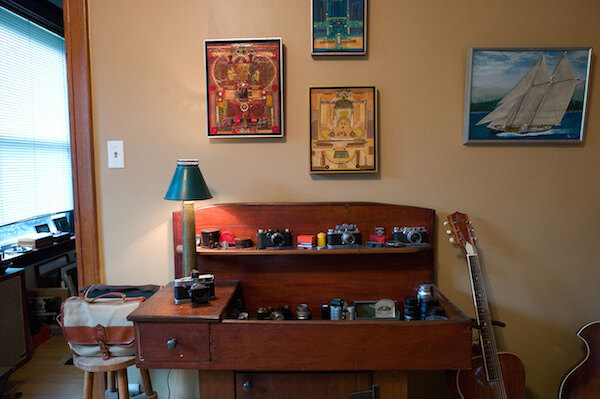
The lower the number of focal length millimeters, the wider the angle of view (say, 35mm).* The higher the number, the more narrow the angle of view (90mm, for example).
* The term “35mm” refers to two different things: the first is the medium of 35mm photography (as opposed to “large format” and such), which uses a 24mm x 36mm frame of film or sensor. The other is the focal length of 35mm, as distinct from wider angles of view such as 28mm, 24mm, 21mm and so on, and from longer angles of view such as 50mm, 75mm, 90mm, and so on. In this article, the term “35mm” refers to the focal length (angle of view) of lenses, not the medium of photography.
Some people see the world of their photography in 35mm angle of view, and some in 50mm. Some people frame the world in 28mm, some in 90mm. Each photographer is different and there is no right or wrong. I know one shooter who considers his 35mm lens to be his telephoto! At any rate, it is of paramount importance to find the focal length that satisfies your photographic itch, and yours alone.
Here are the focal lengths – including both historical and current models – made by or for Leitz – for the Leica M camera system. This list does not mean that bright-line frame-lines appear in the viewfinder/rangefinder for any given focal length below. Or, that these models are still currently manufactured. This is the list of ALL Leica-manufactured M system lens focal lengths out there in the world:
Focal Lengths
15mm
16 – 18-21mm
18mm
21mm
24mm
28mm
28 – 35-50mm
35mm
40mm
50mm
75mm
90mm
135mm
The Leica M rangefinder does not support lenses “longer” than 135mm.
Leica M lenses and “Depth of Field”
“Depth of field”* is a phrase used to describe what part of an image is “acceptably in focus.” To be exact about this, any lens can be focused only at one exact point in space. Let’s look at an example:
You focus on your subject’s eyes at, say, five-feet and three-inches away from the camera. The subject – or the part of the subject – that is in acceptable focus at 5'3" away from the camera may be out of focus at 4'10" and nearer to the camera, and also out of focus again at 5'7" and farther back. We have an effective DOF – at that aperture (say it’s f4) – of nine inches.
Now, let’s open the aperture, using a lower-number f-stop (to say f1,4). The depth of in-focus area will shrink to, say, three inches. Close the aperture down, using a higher-number f-stop (to, say, f11), and the depth of in-focus area will grow markedly to, say, several feet or more!
This is DOF in action, and a rule of thumb: as the aperture gets smaller (that is, the higher the f-stop number), the lens will render more in focus. Conversely, as the aperture gets larger (that is, f-stop number gets lower), the lens will render less in acceptable focus behind – and in front of – the plane of focus.
So, if we focus on a persons eyes at f1,4, the ears may be out-of-focus. A wide aperture such as f1,4 affords little depth of the in-focus area. If we “stop down” to f5,6, we increase the depth of the in-focus area within our frame. This is a simple principle that acts on all photographic lenses, yet can vary with each lens model.
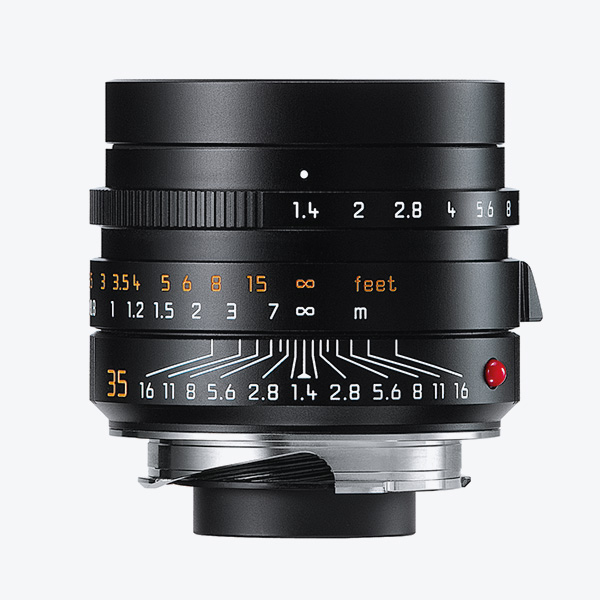
Each Leica lens has a DOF scale inscribed on the lens. This allows you to coordinate the focus of the lens and the effect of an aperture setting simply by using the scale.
Wide-angle lenses have greater inherent DOF, simply due to the laws of physics. Conversely, longer focal length lenses have less inherent DOF. These are true, no matter what f-stop you choose. In other words, all else being equal, a 21mm wide-angle lens set at f8 likely has a greater depth of in-focus area than a 50mm lens set at the same aperture, f8. Optics can vary widely model to model, but the same principle of DOF will apply. At least while we’re on this planet.
* Note that “depth of field” and “depth of focus” are two distinct and different concepts. We are careful here to delineate between the “depth of the in-focus area” and “depth of focus”; this article does not treat the concept of “depth of focus.”
How to Choose Leica M Lenses
Now that we know what the focal length and aperture of lenses are all about, we can discuss how to choose your Leica M lens:
One way to determine the right lens for your Leica M camera is to look to a photographer whose style or work you admire; what focal length do they use? Another way (and this is most popular) is to start with one lens that has the most versatile set of applications. For the Leica M camera (and I think generally, too) the 35mm angle of view is best. Used thoughtfully, the 35mm focal length can be used for landscapes, street shooting and even portraits of people with equal effectiveness. One excellent example is the renowned work of Peter Turnley. Many other photographers find the 35mm focal length the most versatile.
For some photographers, the 50mm angle of view is closer to their compositional eye. Everyone is different and the selection of focal length is highly subjective. For example, if I am outside and wandering about, I likely will have a 50mm lens – since that is how I compose in my mind’s eye. I find that 35mm has too much extraneous stuff in the frame. However, if I am shooting indoors in perhaps closer proximity to my subject, I find that 35mm is not too wide at all – I just need to get closer and can fill the frame more effectively in close those quarters. Everyone is different.
Give us a Call at (800) BUY-LEICA (800) 289‑5342
My 35mm Versus 50mm Story
A potential customer came into the showroom with his recently acquired Leica M9 camera. He needed a lens.
“I’m a friend of X (a renowned photographer), and he told me to get a 35mm lens,” the new Leica owner told me.
“Sure, that makes good sense. I use a 50mm personally, but let’s try them both out. Here.” I placed two lenses on the counter.
We put the 35mm Summicron‑M f2 lens on his camera, and then the 50mm Summicron‑M f2 lens. He tried them both and noticed the merits of both. He seemed to lean toward the 50mm lens as he ambled around the showroom and gallery taking pictures. But it’s hard to tell when you’re new to the system; visiting a Leica dealer with a deep knowledgebase, excellent service, and a wide inventory is the best way to do this…
“X told me that 35 is best. You’re telling me 50mm is best. I don’t know what to do. Do you know X?”
“His work is excellent, but we’ve never met. He’s giving good advice. It’s completely up to you,” I told him. “If you want to, take both and shoot for a week and decide. I agree with X – 35mm is more versatile, but 50 is how I see the world.”
“I’m calling X now and I’m going to ask him. Here…” He put this phone on the showroom counter; we were all on speakerphone.
“Hey, X, I’m here at Tamarkin and he’s saying 50mm and you’re telling me 35mm – who do I listen to?”
X paused for a moment on the other end of the line, and said: “Ask him how many books he’s had published.”
I could hear him clearly, and I burst out laughing. It was a truly funny remark that highlights exactly how subjective these choices can be.
When we did meet some time later, I recounted the exchange to “X”, who told me that he was mortified for a moment before he heard me laughing on the other end of the phone. We had a good laugh, and we continue to razz each other about the 35 versus 50 debate. In fact, when he did a book signing in Chicago, I bought in a book for him to sign – another author’s book – called “Choosing and Using Leica Lenses.” As I waited in line, I hung back and when my turn came, I stepped up and carefully slid the book right under his hovering pen. I asked, “Will you sign it, to …uh, ‘To eBay’ please?” He looked up, recognized me, rolled his eyes, shook his head, and laughed.
The moral? Find your own path – your focal length that supports how you see the world, and that enables you to make the image you see in your mind’s eye. Take your time. Ask questions. And shoot, shoot, shoot. Shoot your heart out. And remember, above all, that the best lens in the world is the one you have with you.